A circuit breaker is designed to be your home’s primary line of defense against electrical fires and damaged appliances. When electrical current passing through a branch circuit exceeds safe thresholds, the bi-metallic strip inside the breaker heats up and trips the mechanical switch, instantaneously interrupting current flow.
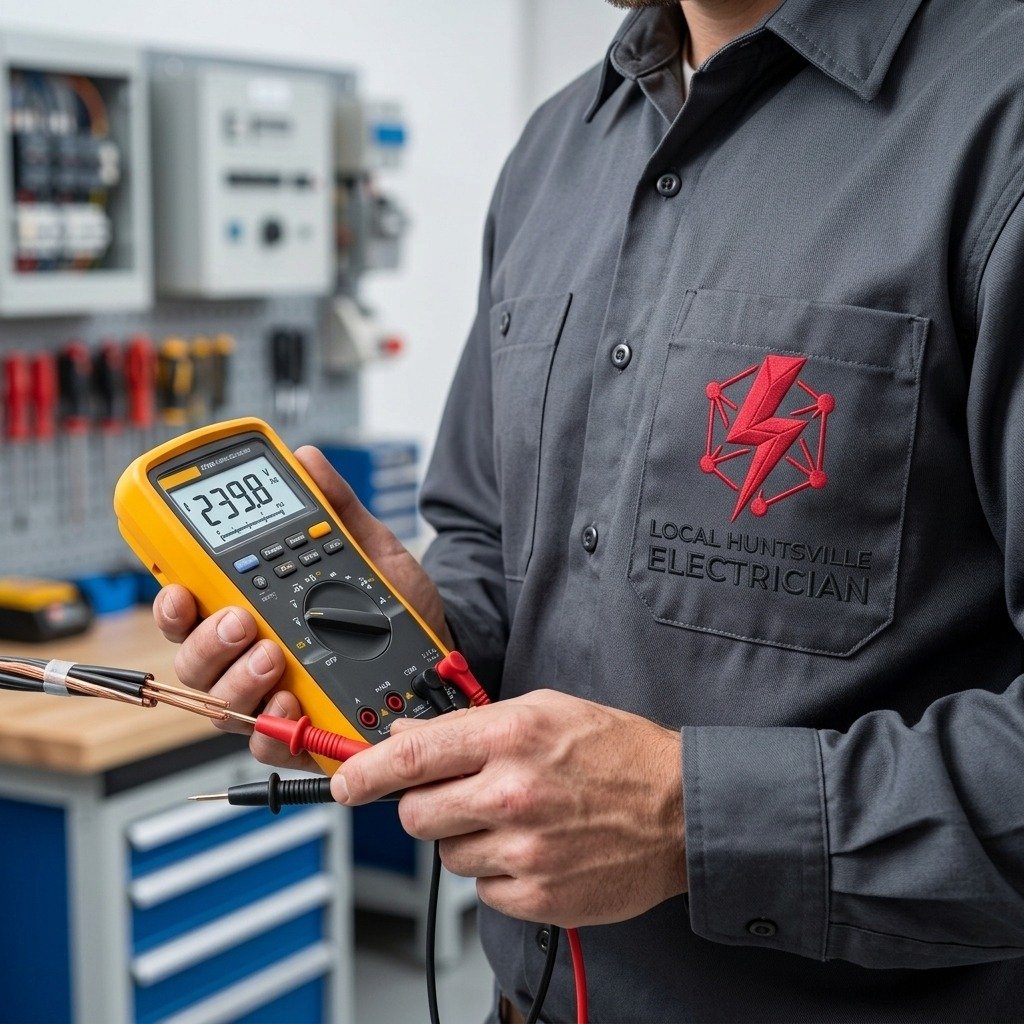
However, when a circuit breaker trips repeatedly, will not reset, feels hot to the touch, or emits a distinct buzzing sound, it indicates an underlying electrical defect that must not be ignored. Simply forcing a tripped breaker back into the "ON" position or repeatedly resetting it can weld internal contacts together and lead to catastrophic structure fires. Huntsville Electric Pro connects you with licensed, certified electricians equipped with advanced diagnostic multimeters, clamp meters, and thermal imaging cameras to safely pinpoint and rectify the root issue.
Accurately determining whether tripping is caused by branch circuit overloading, concealed short circuits, ground faults, or mechanical component failure.
Installing state-of-the-art Arc Fault and Ground Fault dual-function circuit breakers to satisfy current National Electrical Code safety standards.
Inspecting copper and aluminum busbars for arcing pitting, corrosion, and loose tension clips, preventing hot-spot panel degradation.
Eliminating code-violating double-tapped breakers by installing tandem breakers or subpanels, securing loose conductor connections.
Occurs when total connected appliance draw exceeds the breaker’s amp threshold (e.g. running a microwave and space heater on one 15A circuit). Requires load redistribution or dedicated branch lines.
A hot wire makes direct contact with a neutral conductor, creating near-infinite current surge. Trips the breaker with an instant snap and requires diagnostic tracing to locate damaged wire insulation.
Occurs when hot current touches a bare copper equipment ground wire or metal outlet box, often triggered by moisture intrusion in bathrooms, kitchens, basements, or outdoor circuits.
After repeatedly tripping over 15 to 30 years, internal bi-metallic springs weaken, causing the breaker to trip at normal current levels. The breaker must be replaced with a genuine OEM unit.
Never mix incompatible breaker brands into your electrical panel. Mismatched breaker clips damage busbar stabs and void panel UL listings. Our service vehicles carry genuine, manufacturer-approved circuit breakers including:
Frequent trips are caused by circuit overloads, dead short circuits, ground faults, or mechanical component wear. If multiple appliances are drawing power simultaneously, the circuit is overloaded. If it trips immediately even with everything unplugged, there is a dangerous short or failed breaker that requires a licensed electrician.
Absolutely not. Breaker amperage is strictly matched to the wire gauge in your walls. A 15-amp breaker protects 14-gauge copper wire. If you swap in a 20-amp breaker without upgrading the wire to 12-gauge, the wire will overheat and ignite building materials inside your walls before the breaker trips.
A loud buzzing, sizzling, or clicking sound indicates electrical arcing across a degraded busbar stab or a failing breaker terminal. Arcing generates extreme temperatures exceeding 1,000°F that can melt the breaker casing and start a fire. Shut off the breaker immediately if safe and call for emergency electrical repair.
Replacing a standard single-pole breaker typically costs between $150 and $275, including diagnostic testing and labor. Replacing specialized double-pole 240V breakers or modern dual-function AFCI/GFCI breakers ranges from $225 to $450 depending on panel brand.
A double-tapped breaker occurs when two branch circuit conductors are wedged under a single screw terminal. Over time, vibrations and thermal expansion cause one of the wires to loosen, creating high resistance and sparking arcing. This is a common home inspection defect that our electricians resolve using approved tandem breakers.
When a breaker trips, its handle moves to a center neutral position. To reset it properly: firmly push the handle all the way to the "OFF" position until you hear a mechanical click, then push it back to the "ON" position. If it immediately snaps back into the tripped position, do not force it—call an electrician immediately.
Keep your electrical distribution network running at peak reliability:
Get fast, reliable circuit breaker repairs and busbar diagnostics from licensed electricians in Huntsville, AL. Upfront pricing and prompt scheduling guaranteed.